
Aarti: An Offering of Light to the Light

As we move into this new year, it is time to take a fresh look at the practice of offering aarti (also spelled arati).
Offering aarti is an ancient form of worship and reverence, and an integral spiritual practice in the Golden Age Movement. Simply put, it is an offering of light to the Light, an offering to the Divine as a way of both calling that Presence forth and acknowledging its ever-presence. As we offer light, we are opening our hearts and offering up our prayers.
Before offering aarti, start by cleaning the sri murthis--sacred photographs embedded with divine consciousness of Great Compassionate Light Sri Amma Bhagavan––with a clean soft cloth and rosewater. Use a cloth that is kept only for this purpose. Clean and freshen items on the altar. Now, it is time to begin.
Aarti is the first offering at the altar. It is the way to begin a pooja (ritual prayer), a sadhana or spiritual process, a ceremony or sacred conversation with our Divine. Aarti is said to have descended from Vedic fire rituals. It means lamp or light and is derived from the Sanskrit word ārātrika, which means ‘something that removes darkness.’
Opening to the Divine

The moment you perform aarti is a moment when you open yourself to the Divine, offering your time, your attention and your heart. It is a time to simply be present with the Divine Consciousness and the Great Compassionate Light Sri Amma Bhagavan, as well as other divine beings you may have at your altar. You are inviting the sacred to be with you, and asking that the field be filled with their presence. You are invoking the Divine and making your own connection with the Great Compassionate Light Sri Amma Bhagavan, both on an inner level and around you. It is a moment of worship to acknowledge the sacred right here, and to give thanks. If others are with you at the altar, aarti brings everyone together in a shared sacred awareness of the Divine.
Ritual Items

Traditionally the lamp,

called a diya, is brass
and has a bowl for the oil, a handle, and a stand. It can be simple with just one bowl or it can be larger and more elaborate with several bowls. Once the bowl has been cleaned, place a cotton wick in it and fill it with ghee or olive oil. You may prefer to use “smokeless” camphor instead. Camphor can be lit directly. You can find it at Indian stores. Regular camphor creates black soot in the room and on items, so make sure you buy the “smokeless.” It’s also possible to use ghee soaked wicks. You may be able to find them online. If you don’t have a diya, you can use a candle. Let it burn out naturally after use. Also do not relight or use a partially burned candle. Start with a fresh one each day. Do not use electric candles. What is important is the intent and sacredness you bring to the moment.
Offering the Light
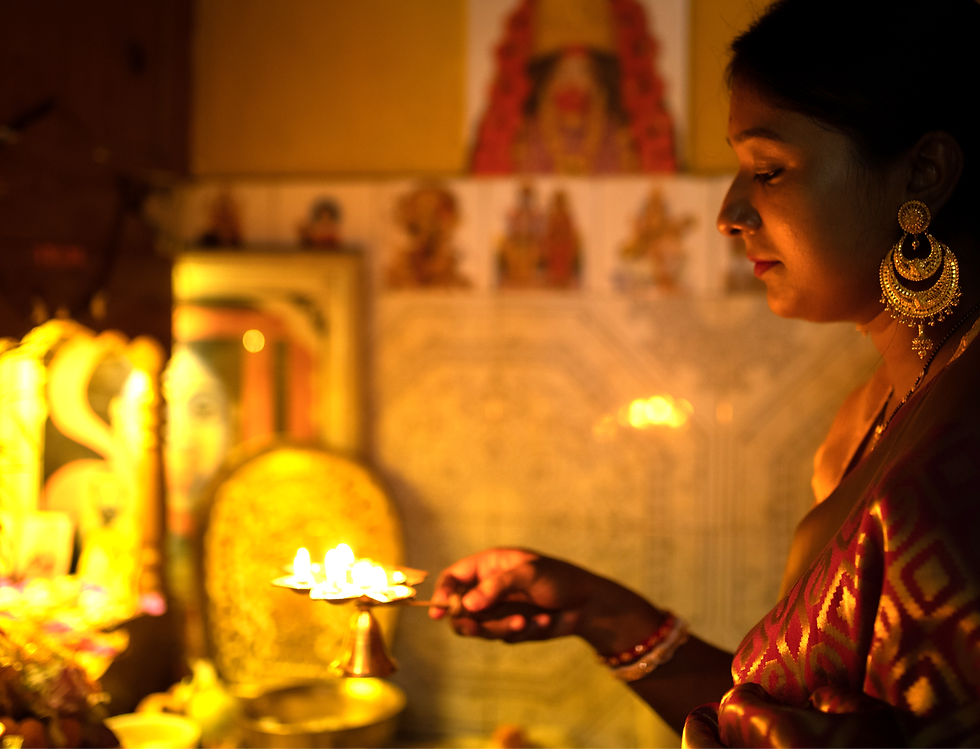
Light the lamp mindfully, and stand in front of the altar. Hold the lamp or candle in your right hand. Support your right arm just near the elbow with your left to keep the shakti in the body. Alternatively, you may use your left hand to ring a light-weight brass bell. The bell is another way to call in the Divine that helps bring your full attention to the moment. Circle the lamp in front of the sri murthi slowly in a clockwise movement, using your whole body.
While circling the lamp, chant the Moola Mantra three times. The Moola Mantra is a way of invoking the Divine, asking it to be with you. When you have finished chanting, shift the diya or candle to your left hand and use your right hand to wave blessings of the light to the beloved deities on the altar.
If you are with other people, present the lamp to their outstretched hands so they can receive the blessings. They receive the blessings and raise their hands above their heads in a brushing motion, letting the blessings waft over them. Then place the lamp on the altar and cup your hands above the flame, lifting your hands above your head three times and let the blessings waft over you. Let the lamp burn out on its own.
Finally, end with gratitude. Give thanks for the Divine and all that you have received by bringing your hands together at our heart in namaste. Follow this with pranam, or prostrating, in front of the altar. If you cannot do that, simply bend forward and bow your head.
Summary
Aarti is a signal that the process of devotion has begun and is an expression of reverence and gratitude to the Divine. At this point, you have welcomed that Presence with respect, humility and heartfelt focus. From there, you will continue with a pooja or another sadhana. Ending your time at the altar with aarti as a way of closing the ceremony.
Sri Bhagavan has said, “One of the greatest gifts we can give to anyone is the gift of our attention and time.” When you stand in front of your altar, in front of your Divine, giving aarti, you are offering that gift. You are saying, here I am, ready to give you my full attention and time, ready to share the blessings of light with the Light.
____________________
Related Resources:
Videos:


Comments